Where it started
A puppet film, shot in a graveyard. I didn’t know it then, but it was the first page of this journal.
A Norse puppet story for ages 10 to 14
Ragnarok. The end of the worlds of the Norse Mythology, where everything we know will be destroyed, as the Vølve foretold. Where all the old gods Odin, Loki, Freya, Baldur will fight each other until everyone and everything has turned to darkness and ash! When all the old creatures and monsters will fight their way free and spread destruction until all worlds are up in flames and until hope is gone!
Then Fenris the wolf will devour the sun!
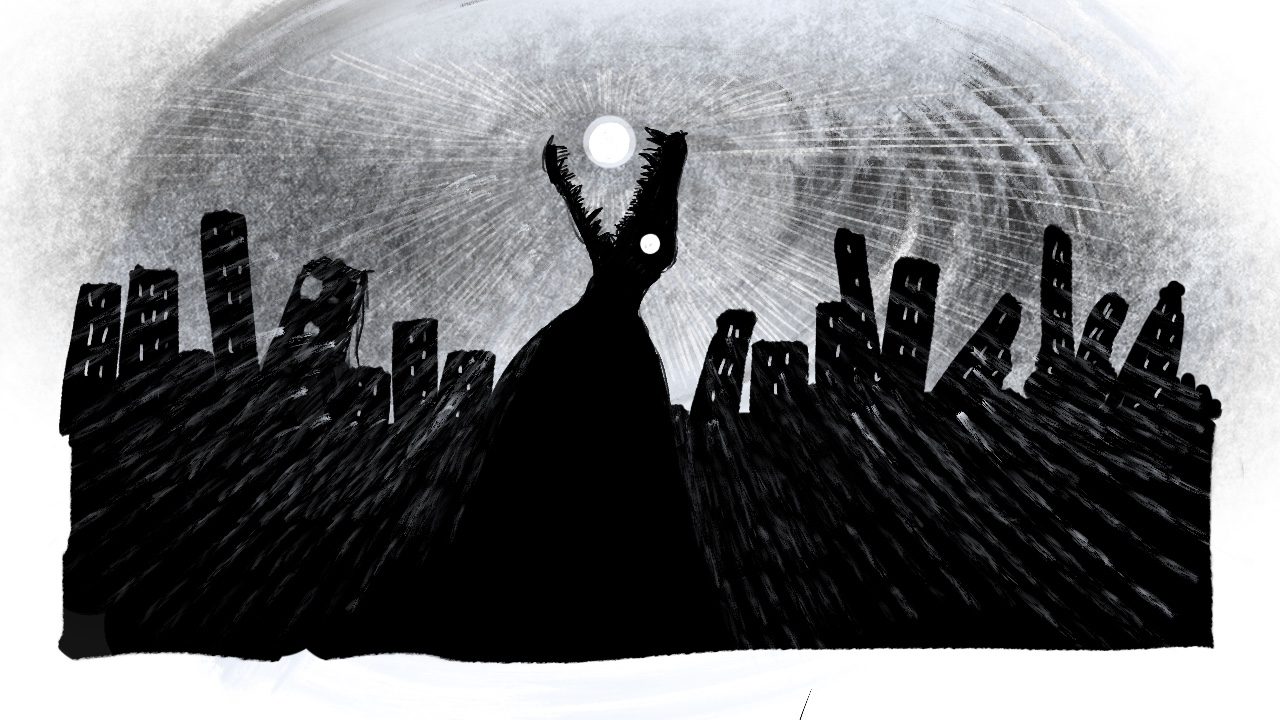
But! It is also the rebirth and re-creation of the worlds, the eternal cycle, the return of light and the triumph of life over darkness. A new era of peace, friendship and togetherness.
It is here in the middle of Ragnarok that we meet our two main characters. Both lost in a new and bleak world, torn from their native world and plunged into the unknown.
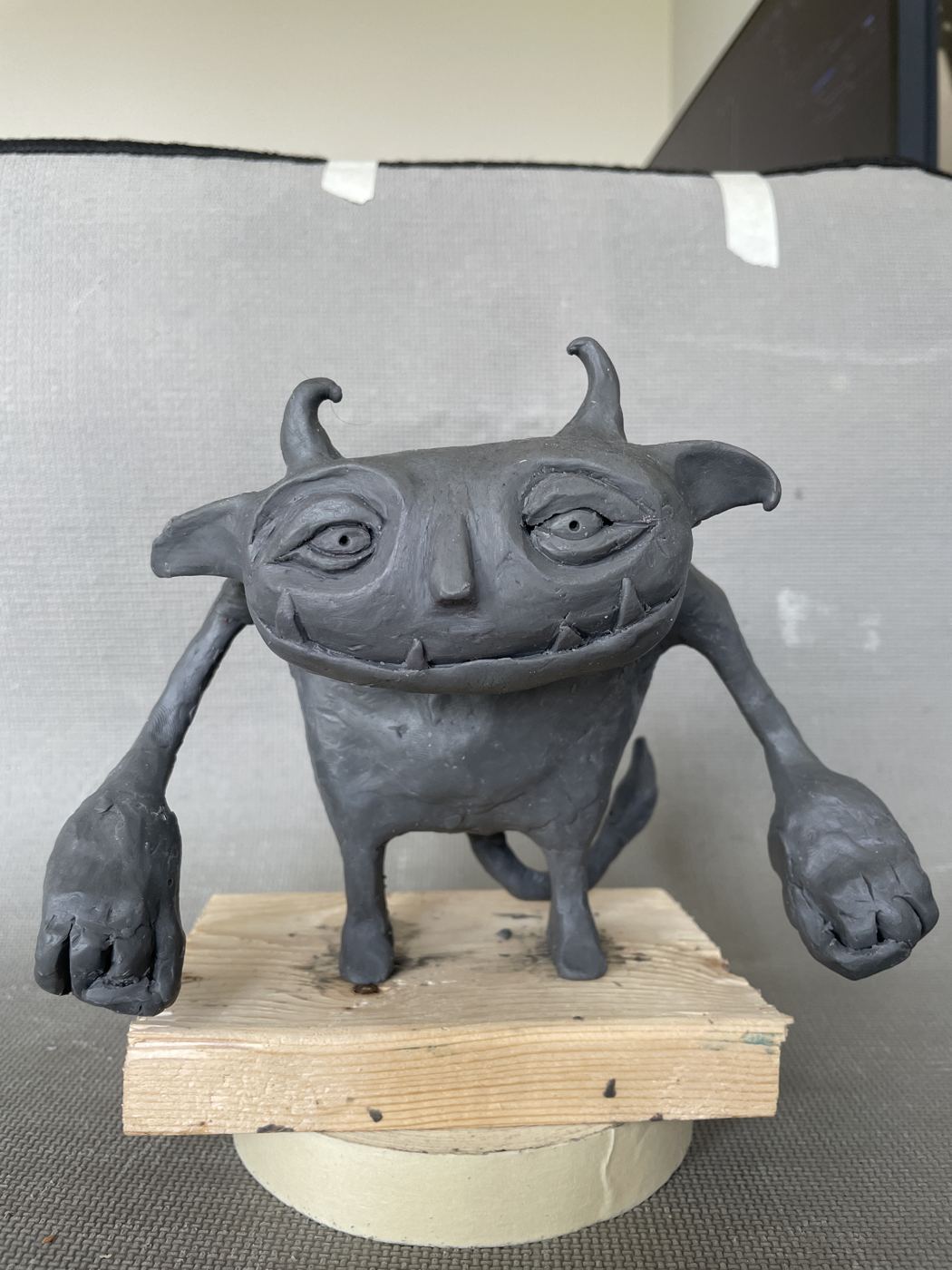
A young barrow troll.
A creature that dwells in the ancient burial mounds. If the old Viking king who was buried there has lain undisturbed for a very long time and has been forgotten by his kin, there is a chance that barrow trolls will move in and make their home amongst the rusted swords, ancient thrones and cold, damp, overgrown moss stones. The barrow troll is a calm creature, slow and incredibly loyal to its own family, which gathers together in the safe darkness of the mound. They can see just as well in total darkness as we can in daylight, but they are blinded by the rays of the sun. They can become very ill-tempered if disturbed in their doings or if they feel threatened.
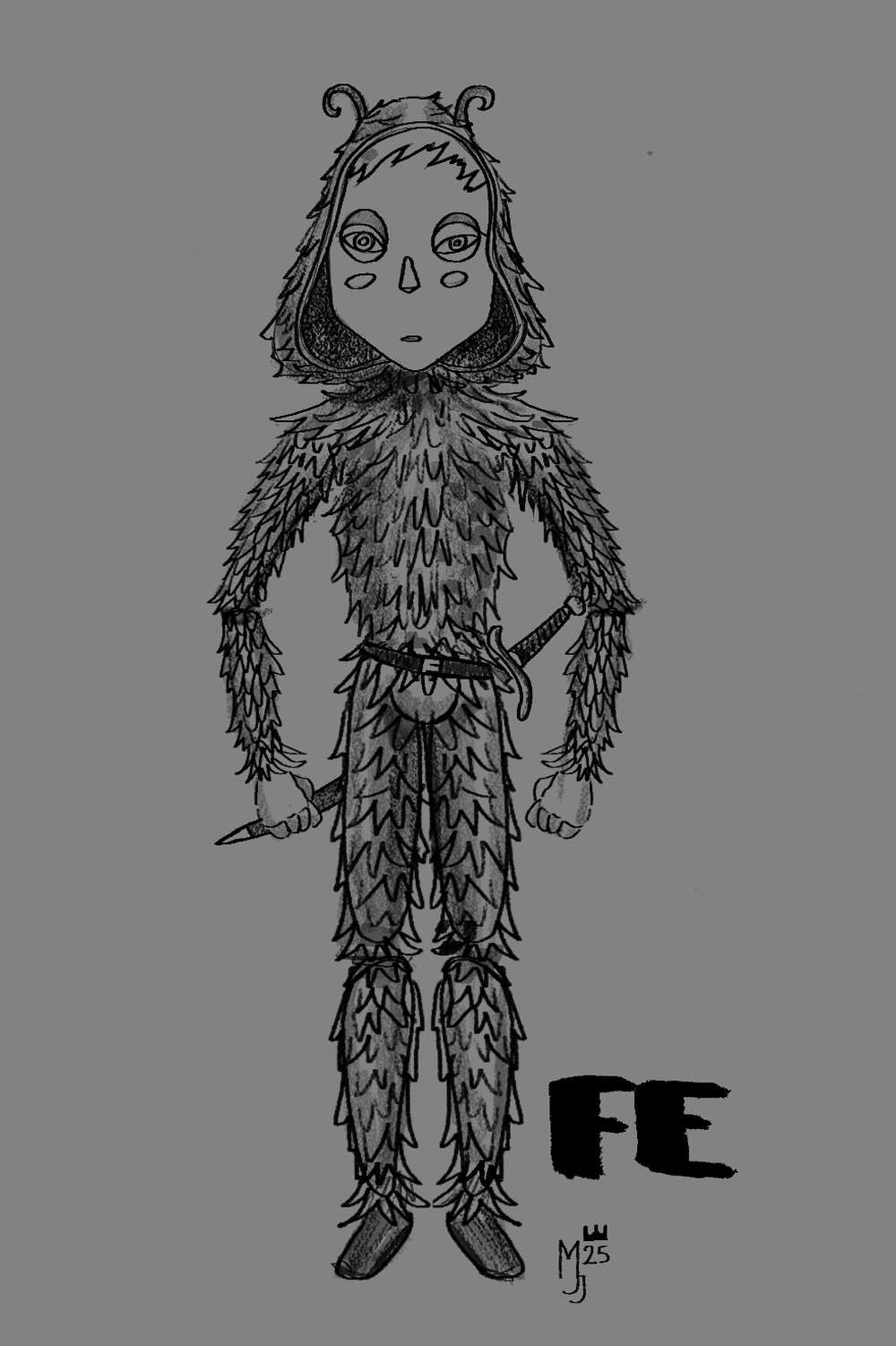
A forest spirit.
A creature who is the best of friends with the ravens of the forest, and just as mischievous. They often live in an abandoned raven’s nest, surrounded by their favourite shiny trinkets and “borrowed” objects. They love to make trouble and play in the sun and by the streams. But most of all they love flying on the back of the biggest raven and gliding amongst the summer clouds. They are very independent, but often live alongside other forest spirits high up in the very oldest of oak trees.
The puppets are part rod puppet, part animatronic: moving eyes and eyelids, played by one or two puppeteers, so the feelings can be read.
How puppets get handmade, the long way round.
A puppet film, shot in a graveyard. I didn’t know it then, but it was the first page of this journal.
Four months of research and development begin.
The question for the autumn: can rod puppets with animatronic features share a stage with worlds projected in real time from Unreal Engine, without the technology stealing the scene?
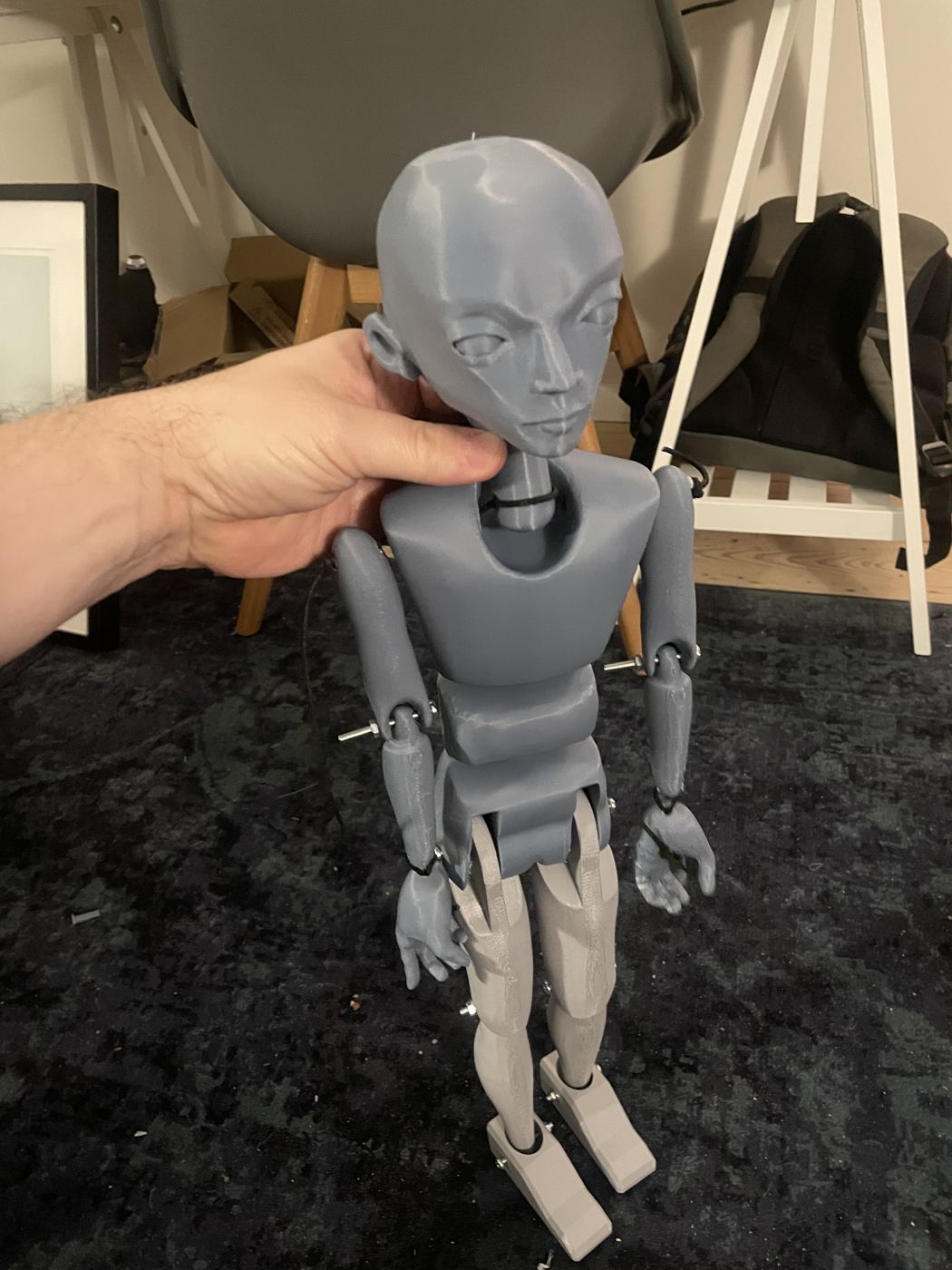
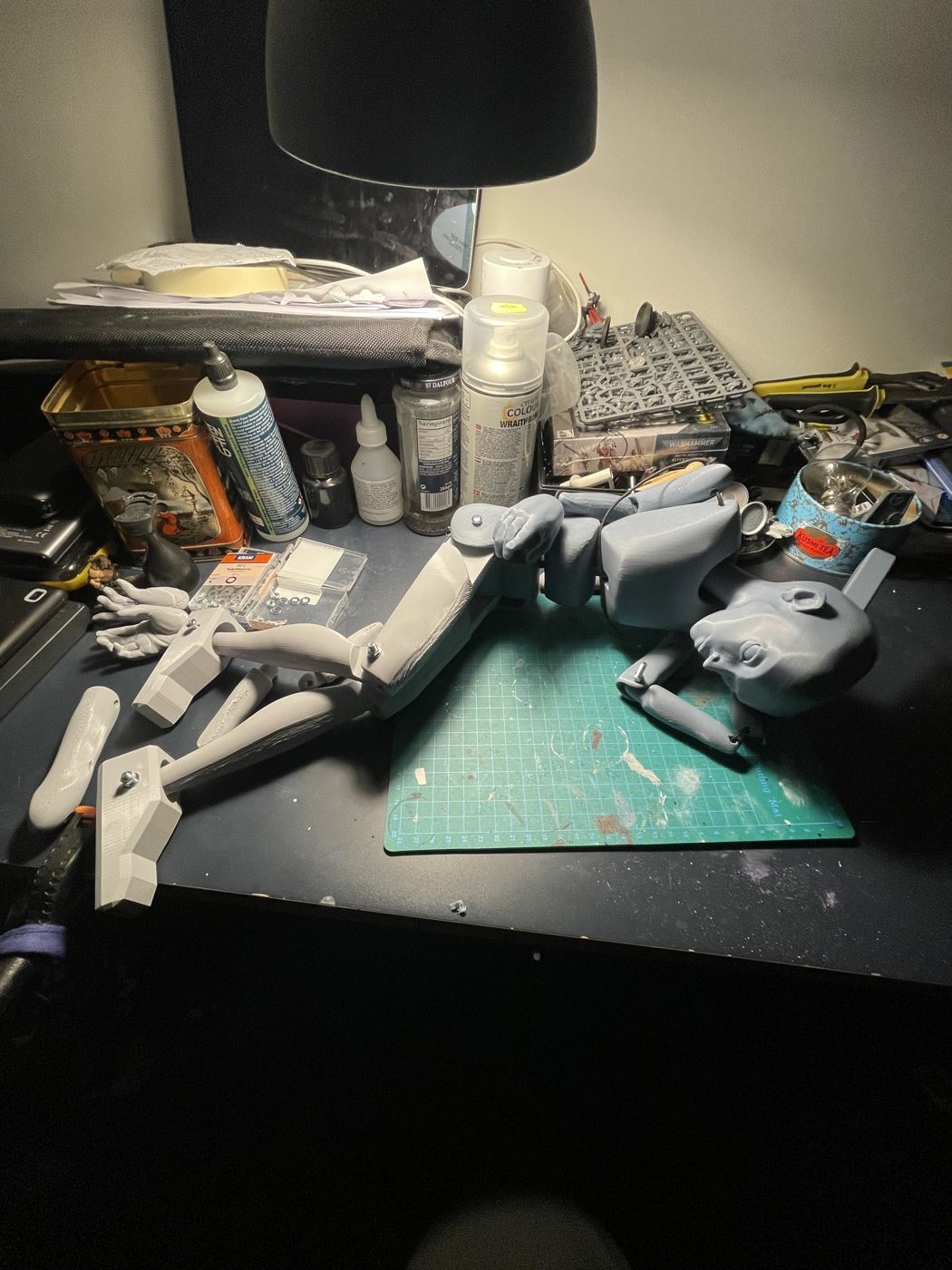
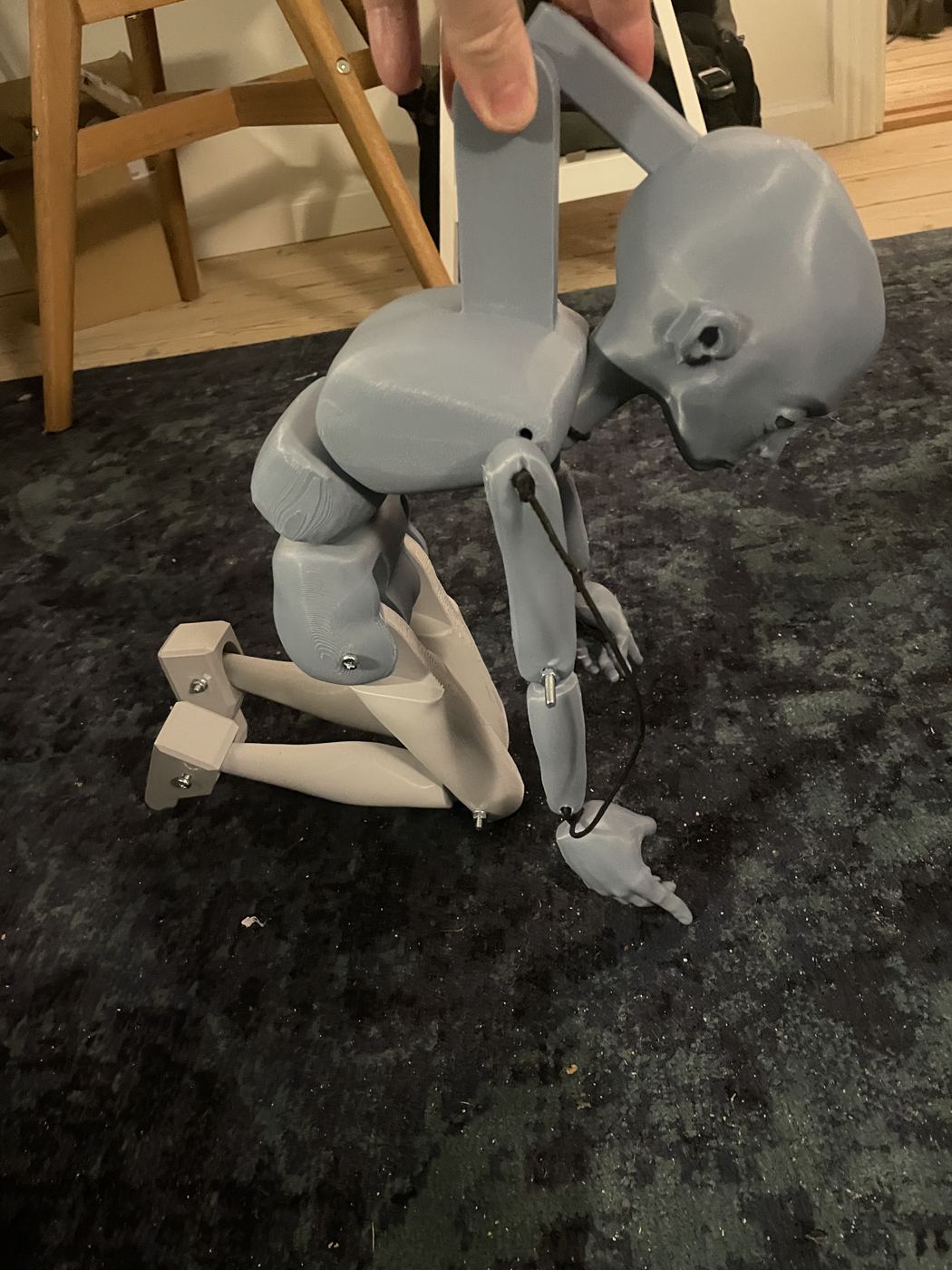
Before FOE existed, I printed a puppet to find out whether a printed body could be worked like a real one.
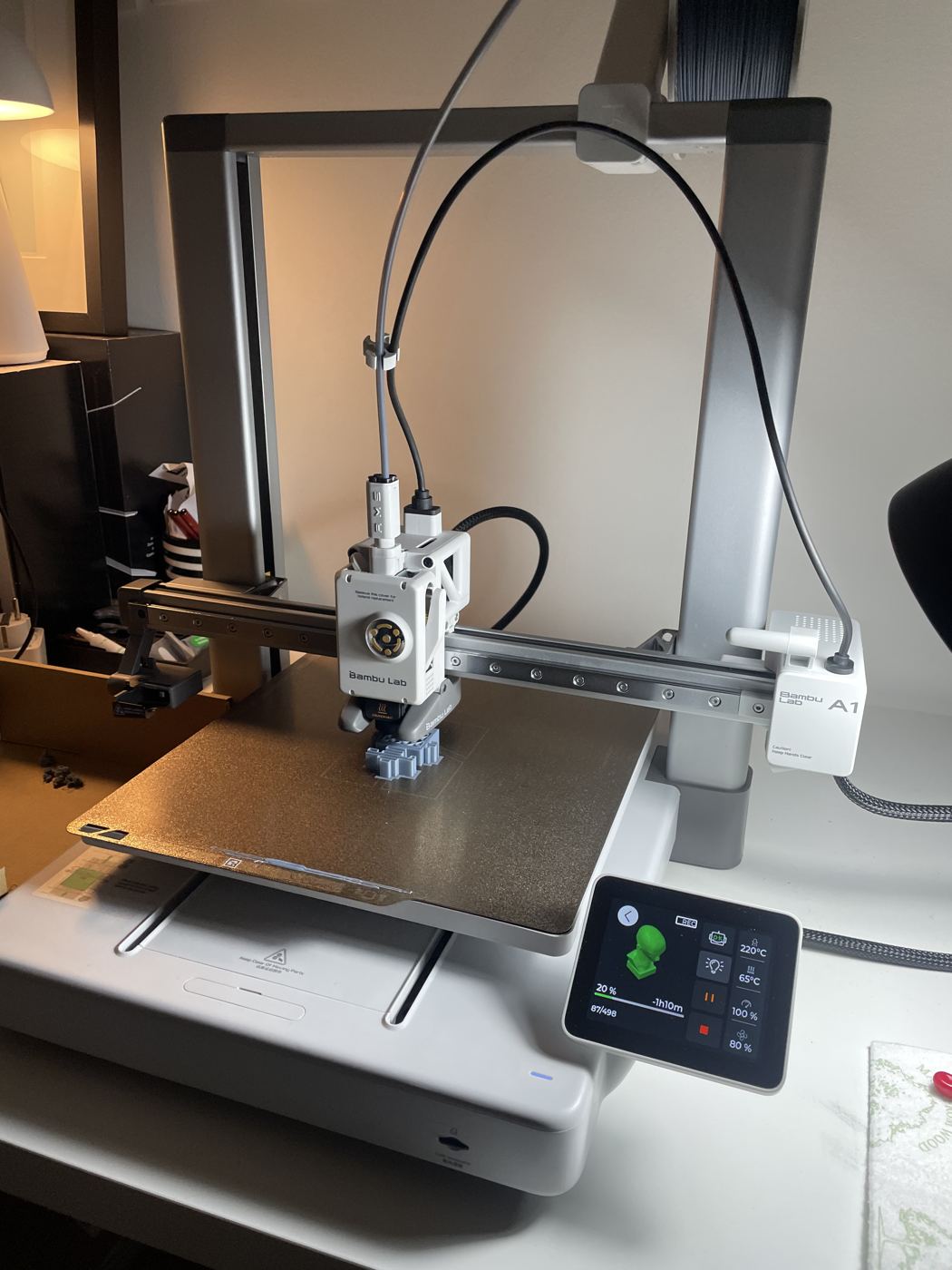
In January the printer went on the desk. By February there was a figure with a head, a torso, arms and legs that bent, and a lot of small parts still to sort out on the bench.
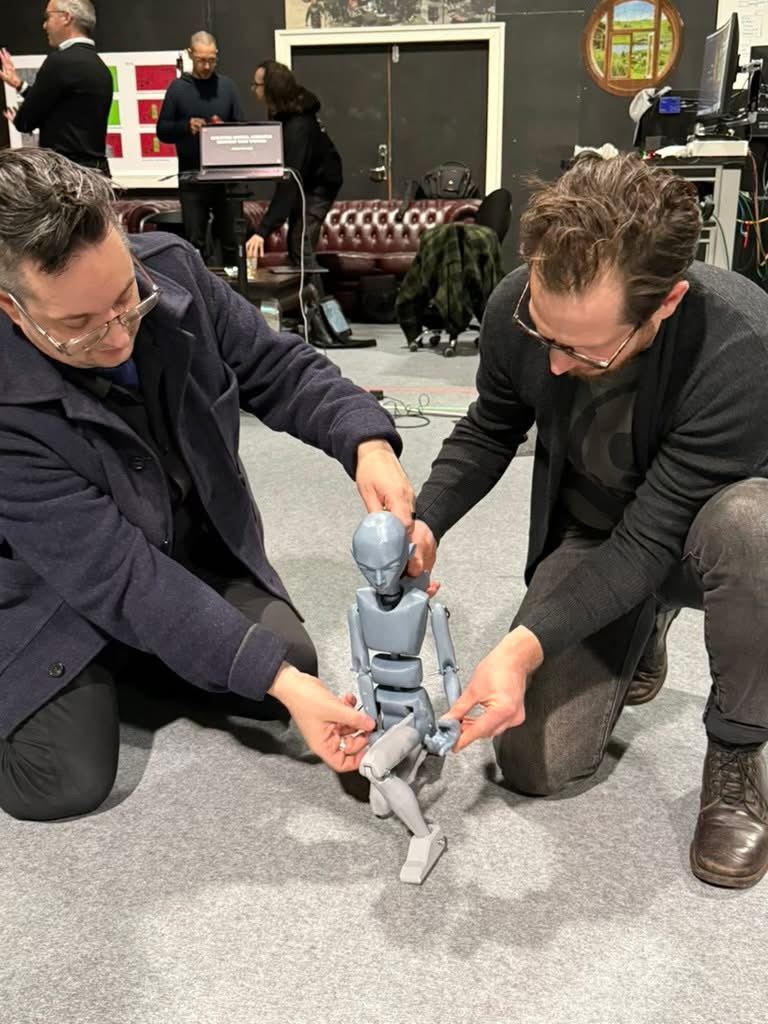
In March I took it to a puppeteer. The test was simple: could it be held and moved like a puppet? It could, a little, and that was enough to keep going.
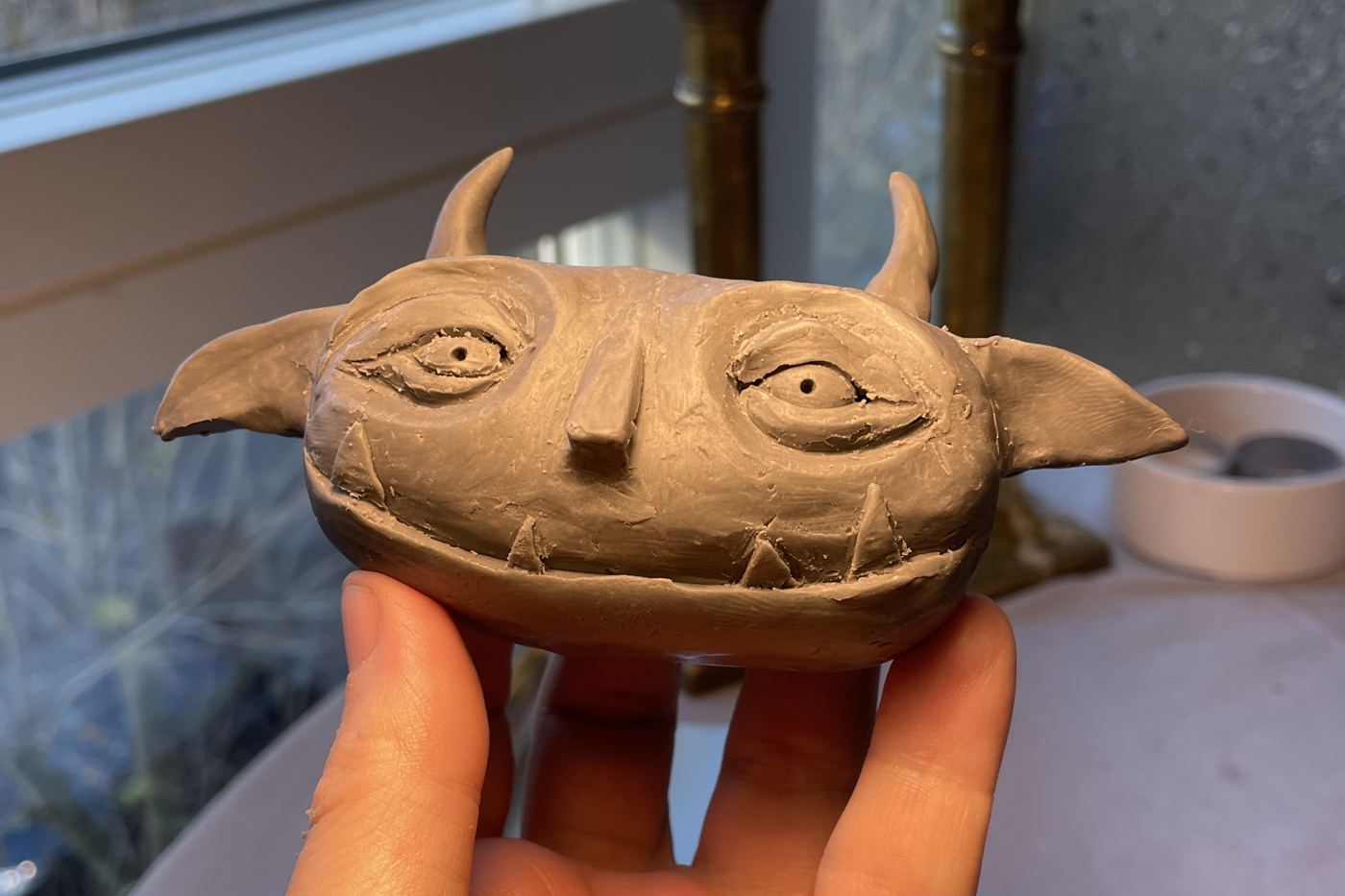
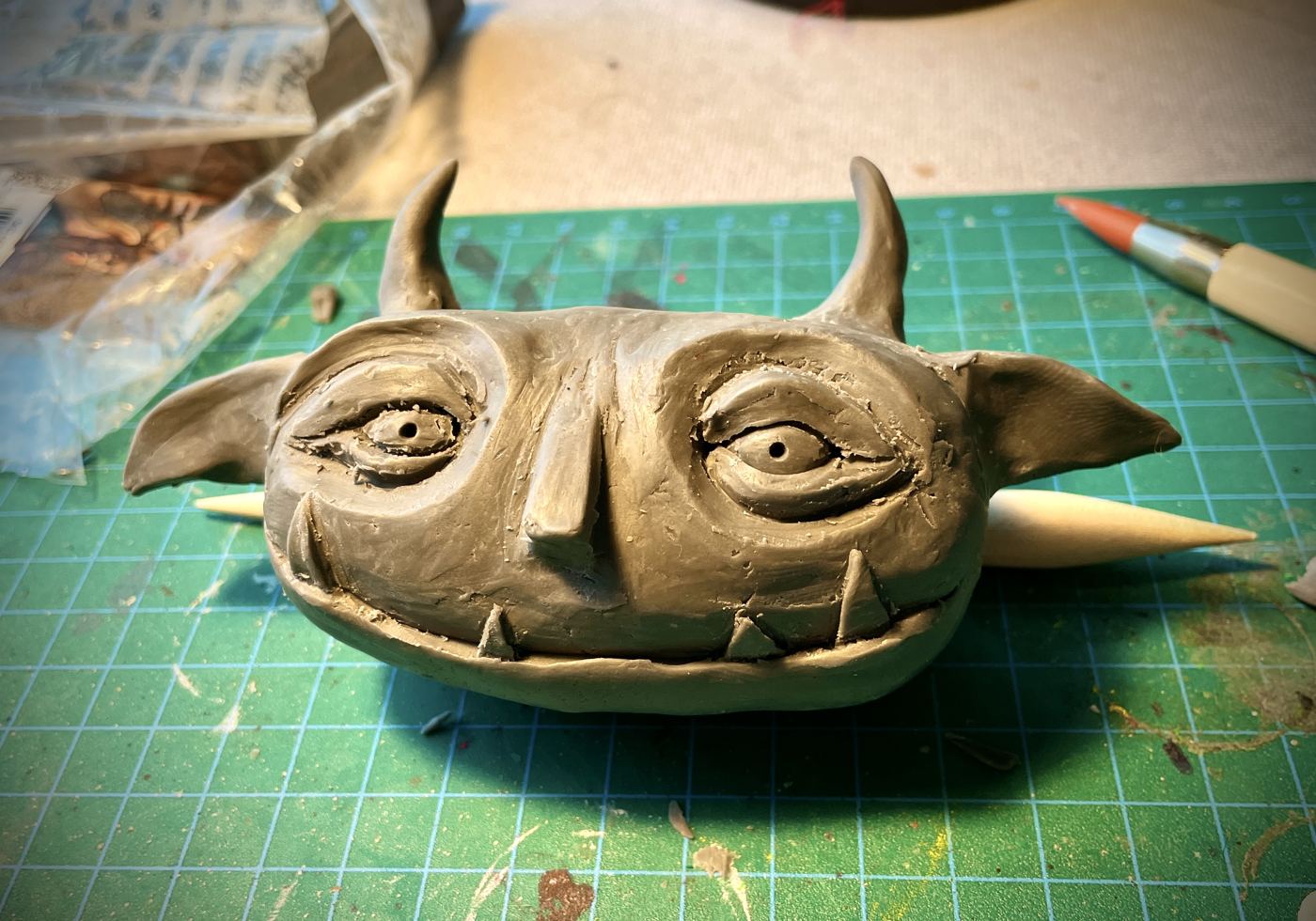
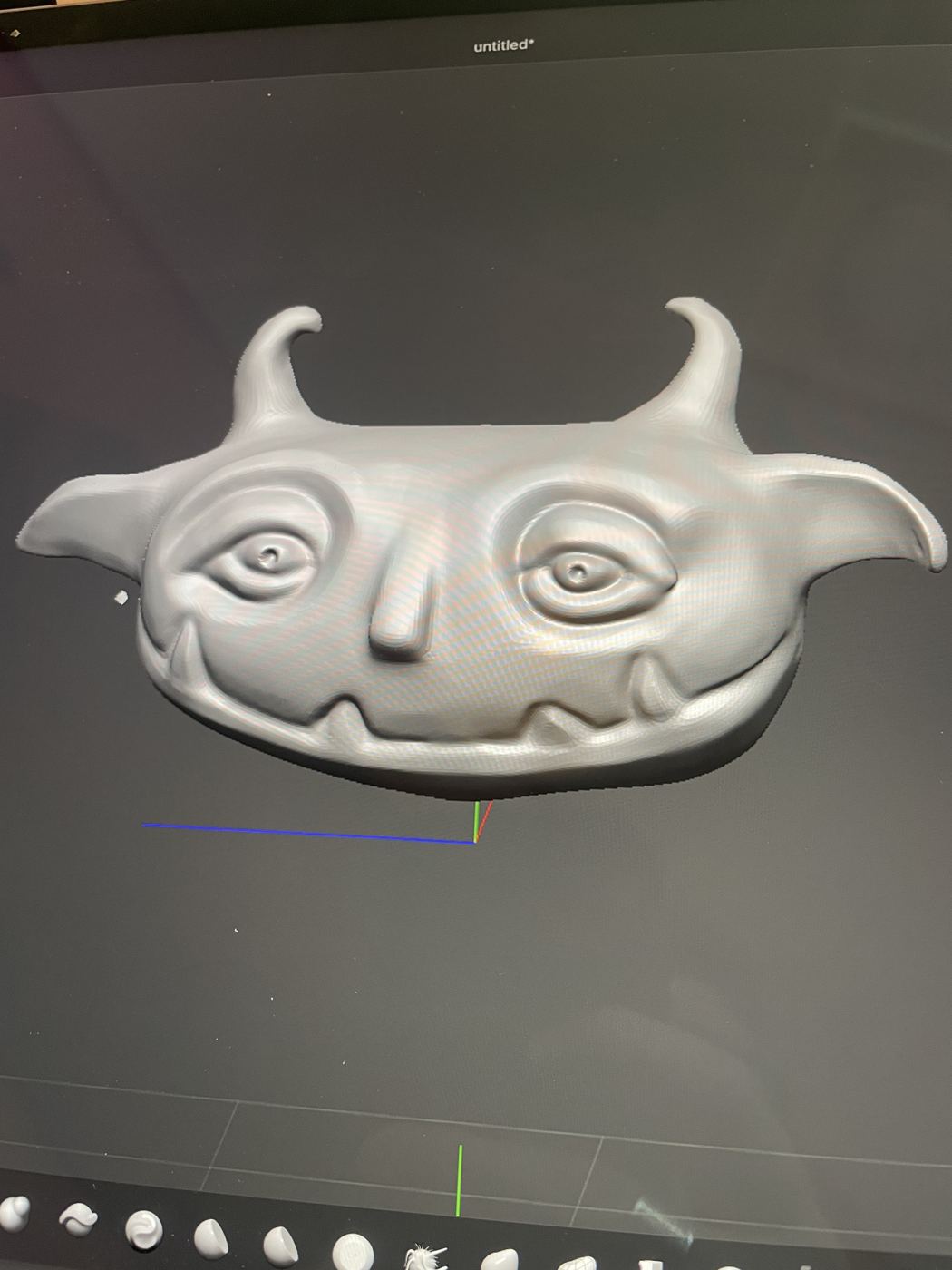
The first thing I made of FOE was the face: horns, big ears, wide eyes and a mouth full of small teeth.
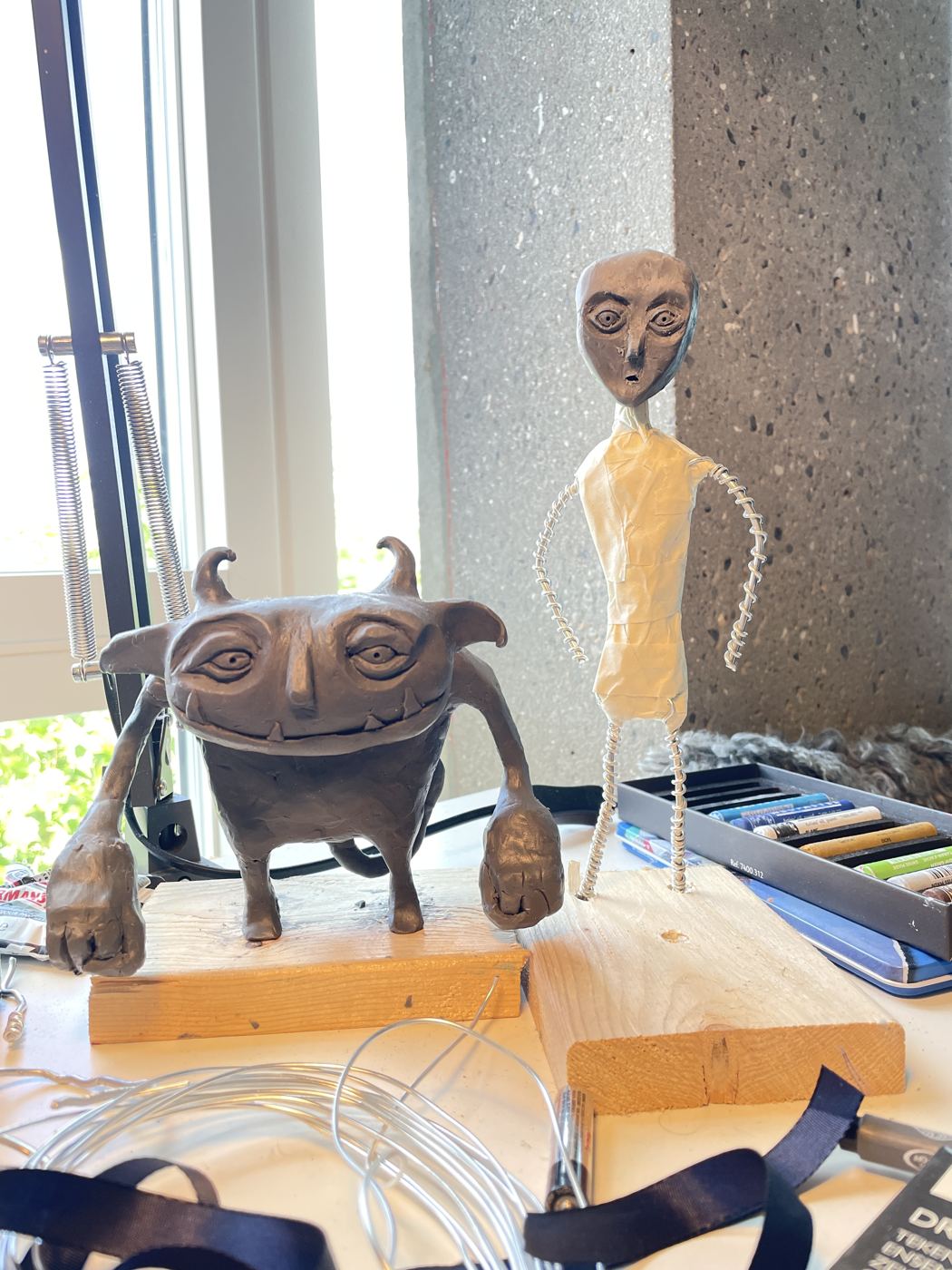
The head came first and the body followed. In December it got a wire armature and a tape torso, so it could stand on a block of wood.
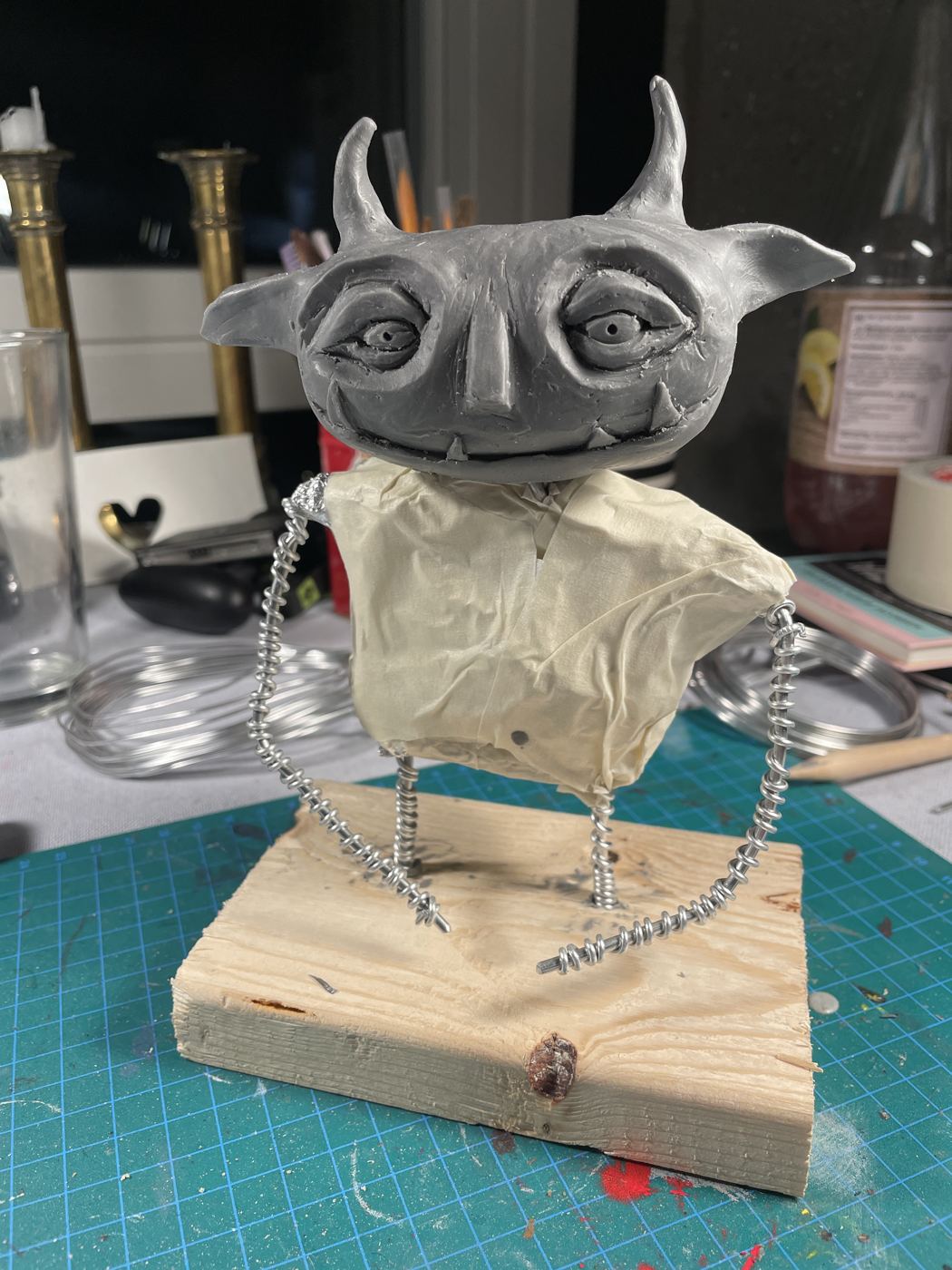
By May FOE had a body, a tail and fists too big for him. The clay sculpt was finished.
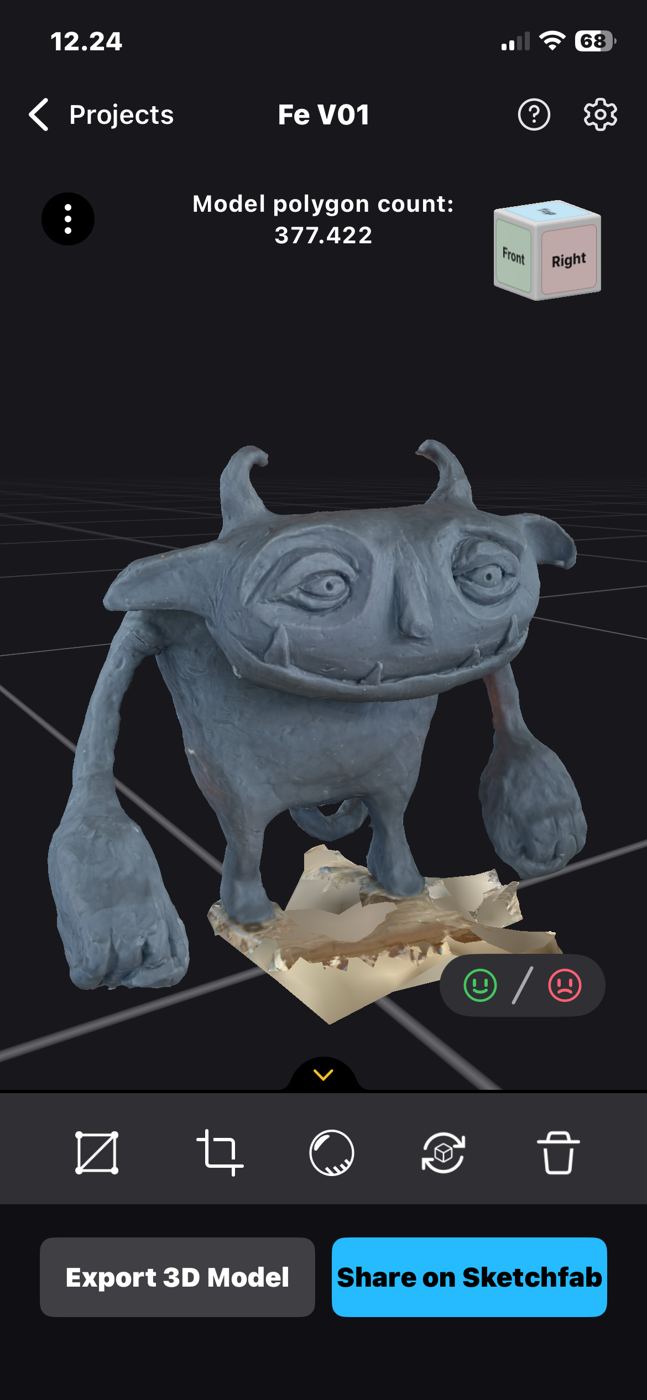
I redrew the sketch I had been working from, a cleaner version of a quick first drawing, and photographed the clay from every side for the scan.
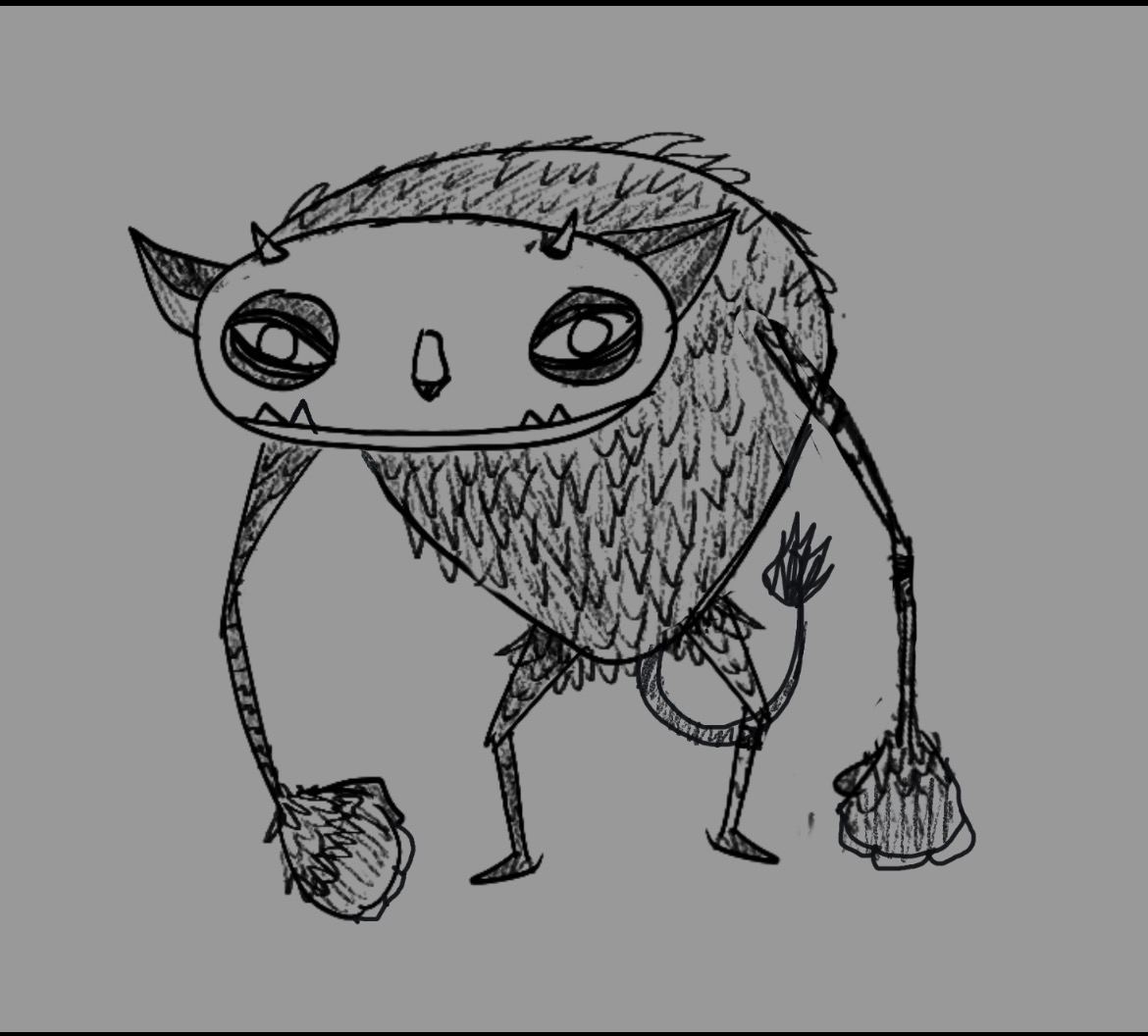
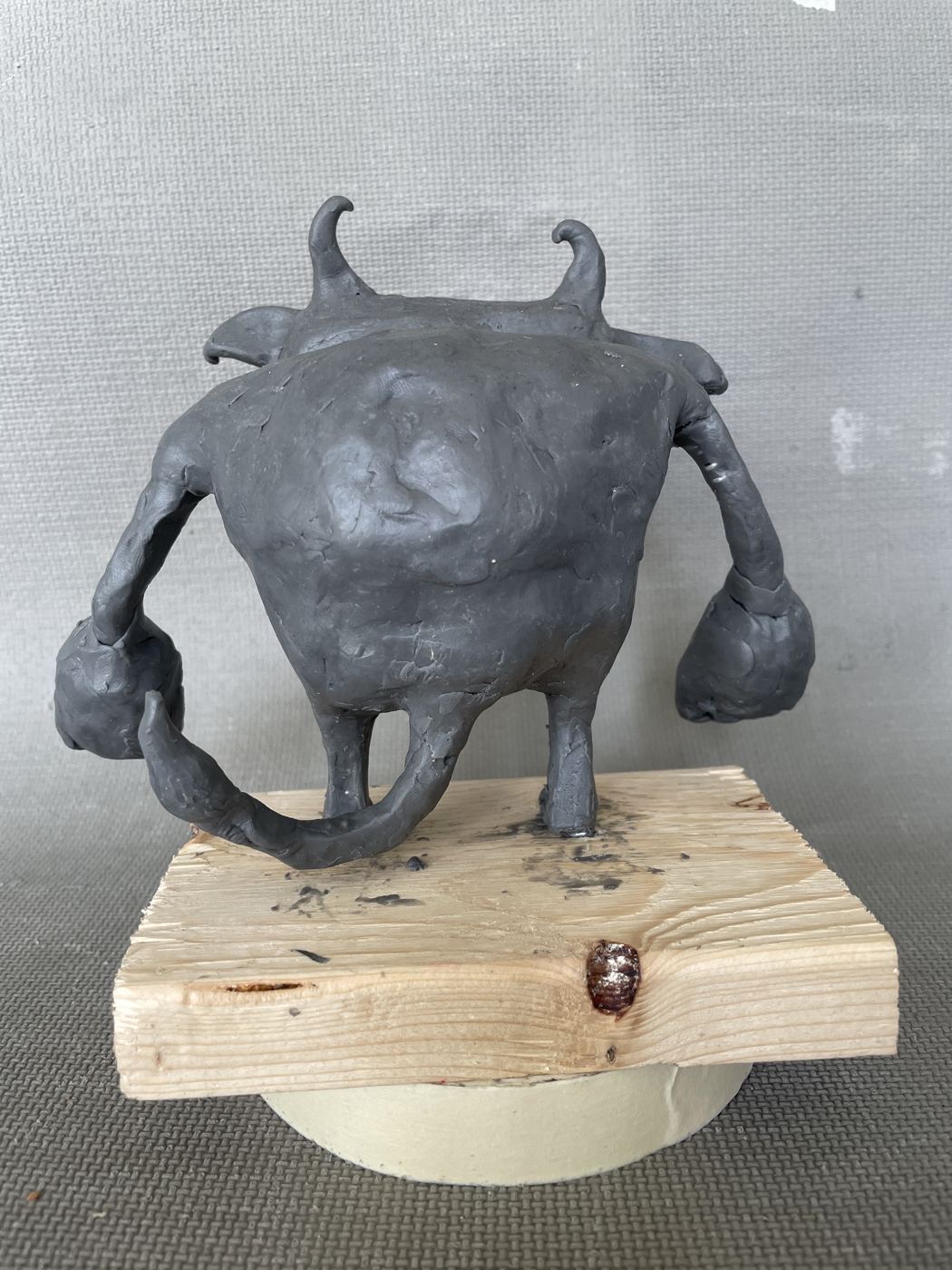
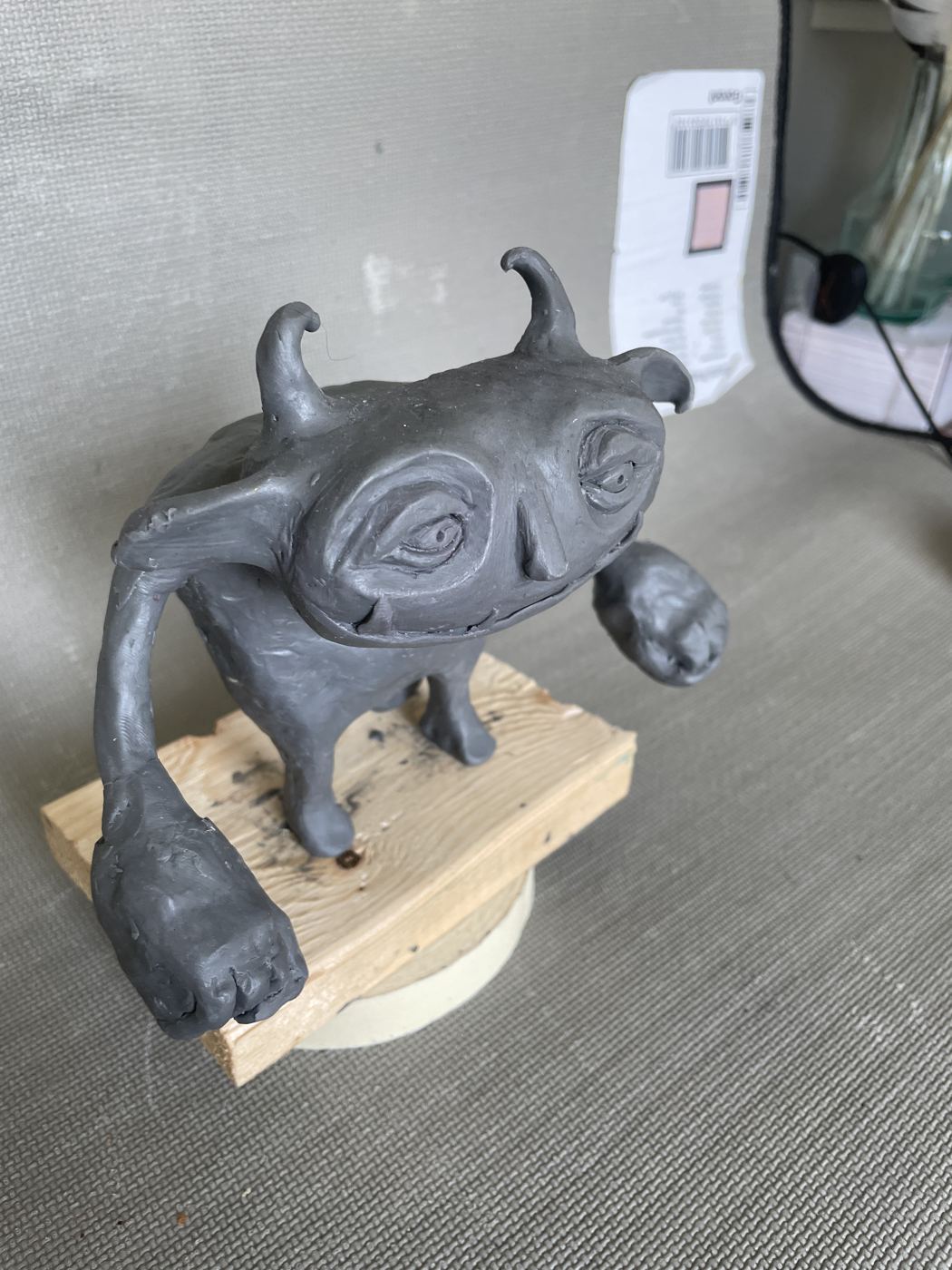
The clay sculpt was finished. Now it had to become something a computer can perform, without losing what makes it him.
I chose photogrammetry over AI image-to-3D. A scan records the actual geometry; AI drifts the features toward a generic average, and FOE is anything but average.
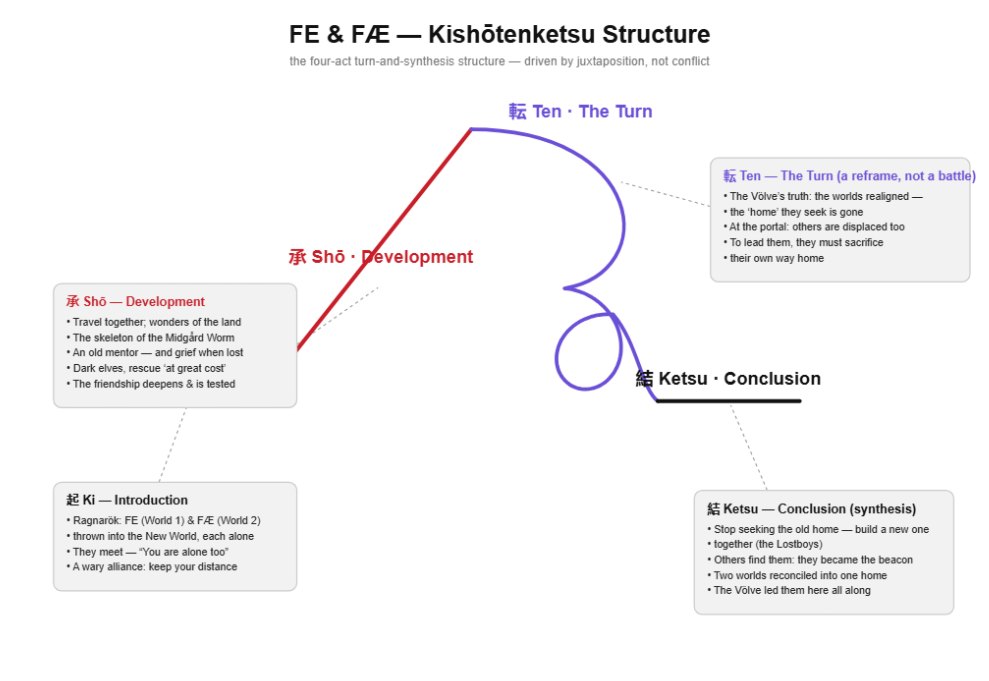
Handwritten notes became a wall of sticky notes in Miro, and the wall became a shape: four parts, borrowed from the Japanese kishōtenketsu.
In kishōtenketsu a story grows from two things meeting, not from a fight. That suits a story about two creatures from two different worlds.
I have always liked that there is no single evil. People change, and people are complex creatures who might do things that others see as evil. The twist is not straightforward, either. It is part of the larger story, not just a bad person being evil, because they change somewhere along the way too.
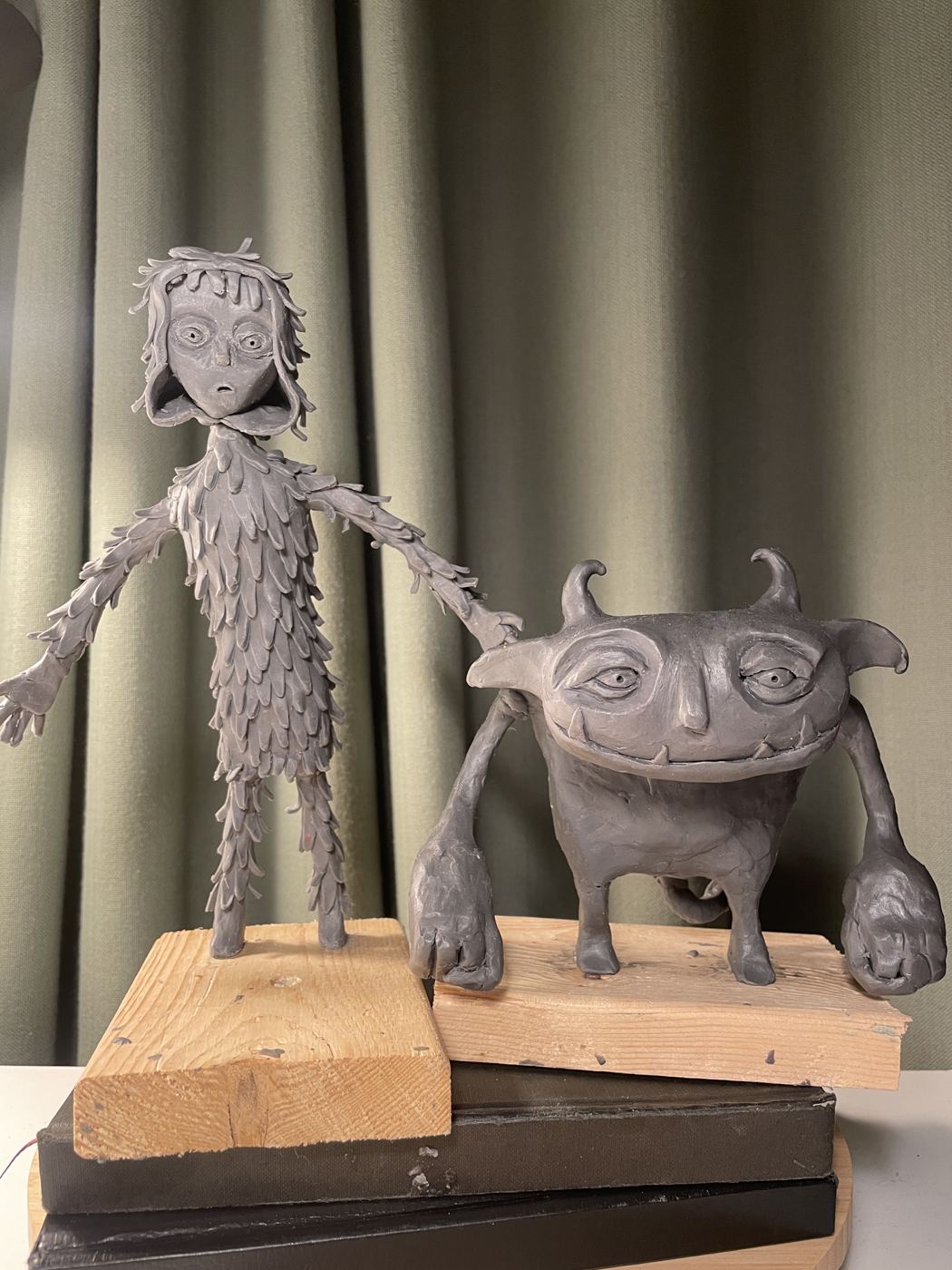
FAE, the other half of the pair, grew slowly: a drawing, a wire armature, a clay face, and then feathers, built up piece by piece.
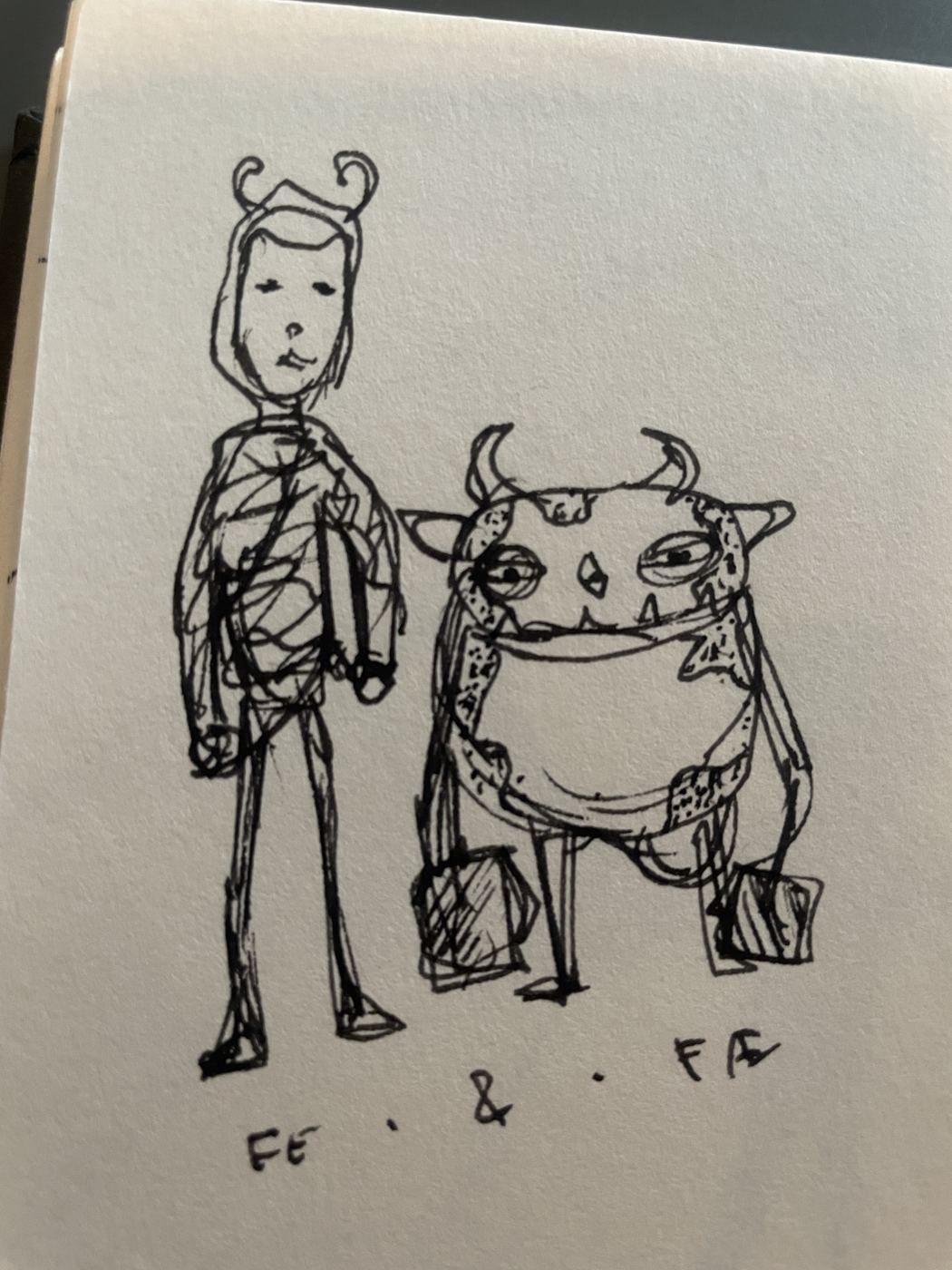
The two were first drawn together in May, then built one at a time.
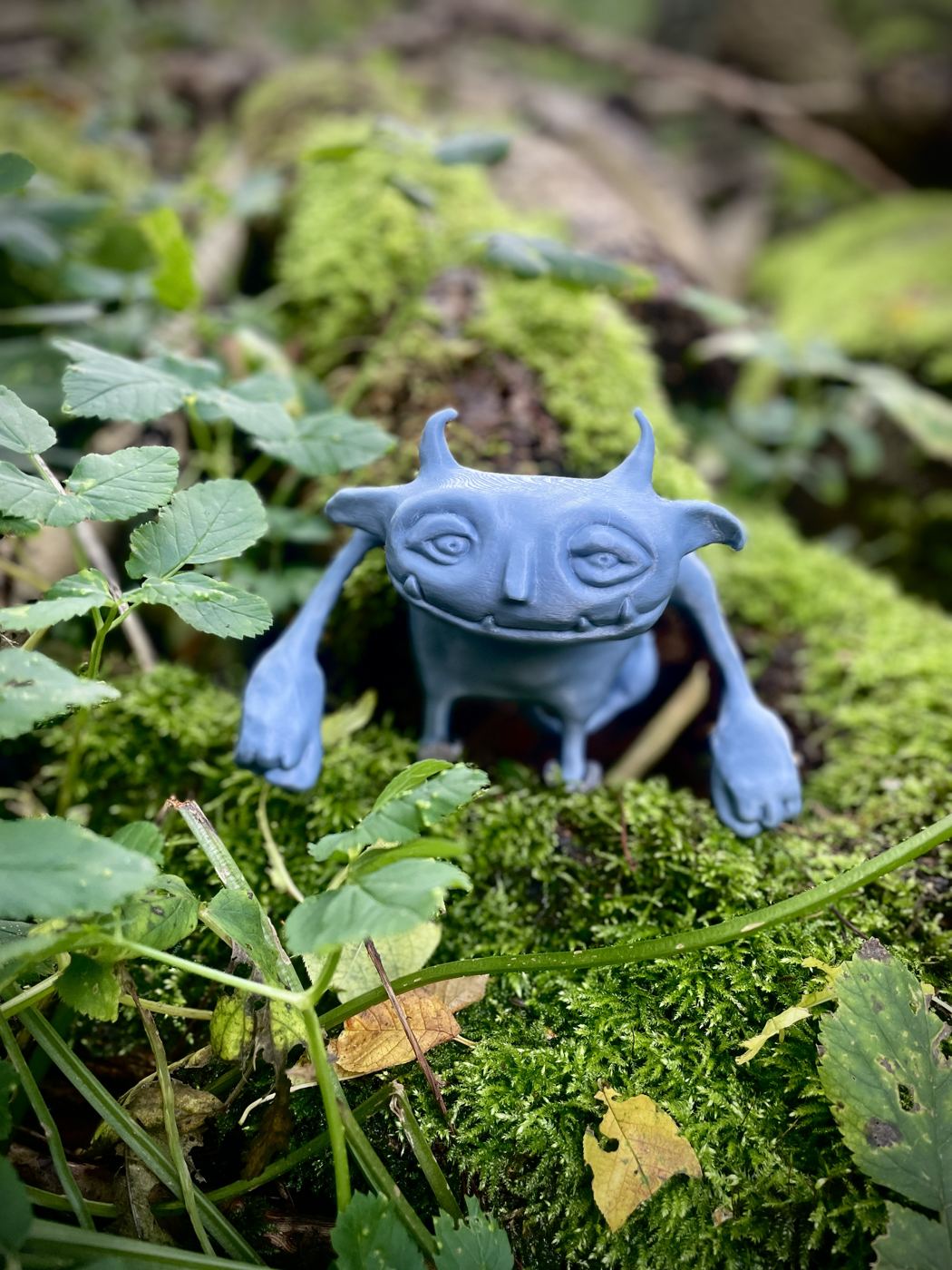
The scan became a model, and the model became plastic: FOE, printed in blue, light enough to hold in one hand.
This is where a digital figure turns into a physical object again. In October he went out into the moss to see how he looks in a real place.
FAE & FOE, lettered by hand. The series has a name that looks like it was made in the same workshop.
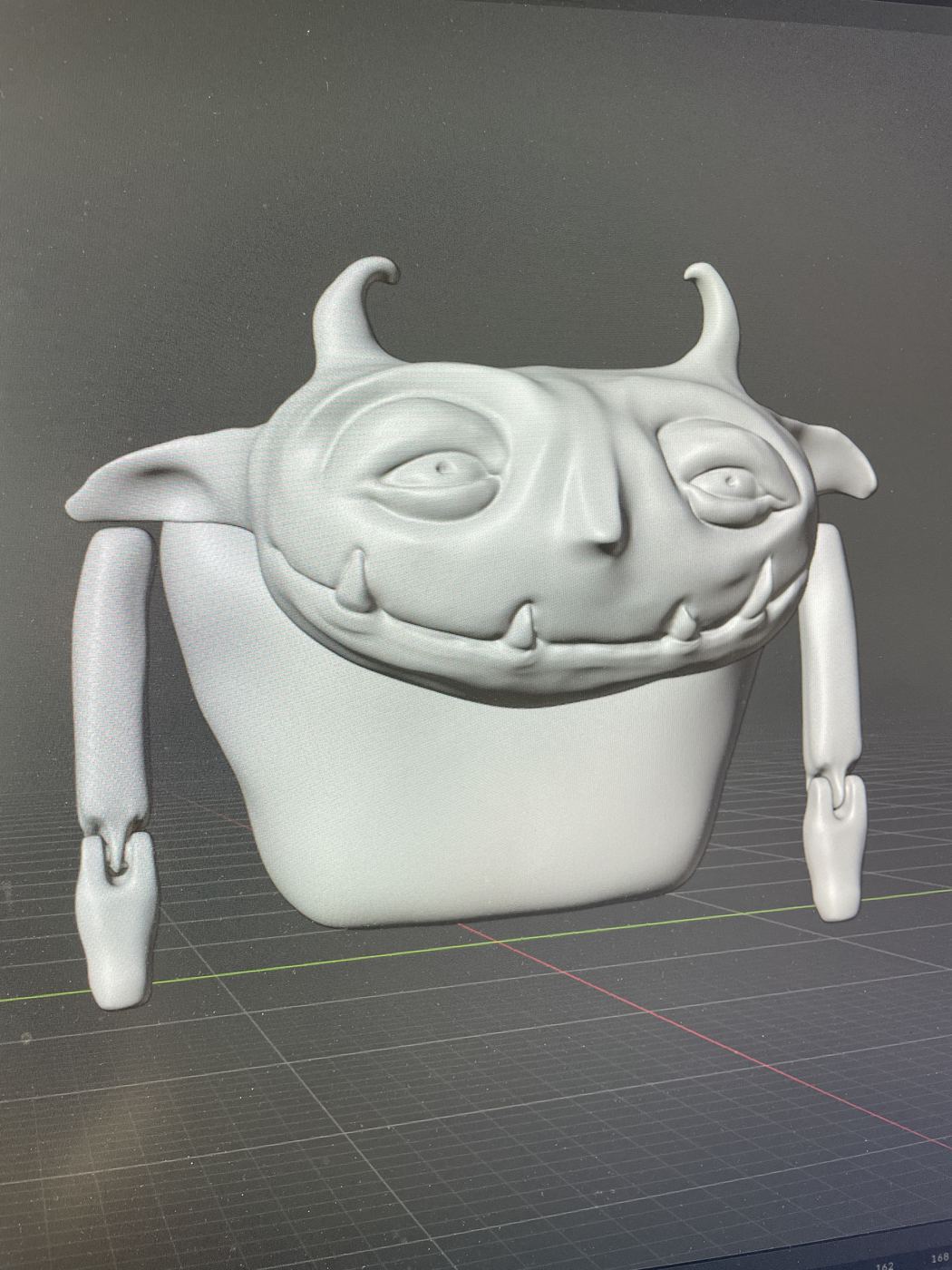
A raw scan is only the start. It has to be cleaned up, rebuilt into a clean model and split into parts that can move.
I added details in Blender and ZBrush, and built 3D joints and attachment points for leather straps, for better puppet movement. I still have to test marionette joints against other methods.
The first jointed FOE: printed in parts, with arms and legs that bend where a body would.
The next test is whether the joints hold a pose and survive a puppeteer’s hands.
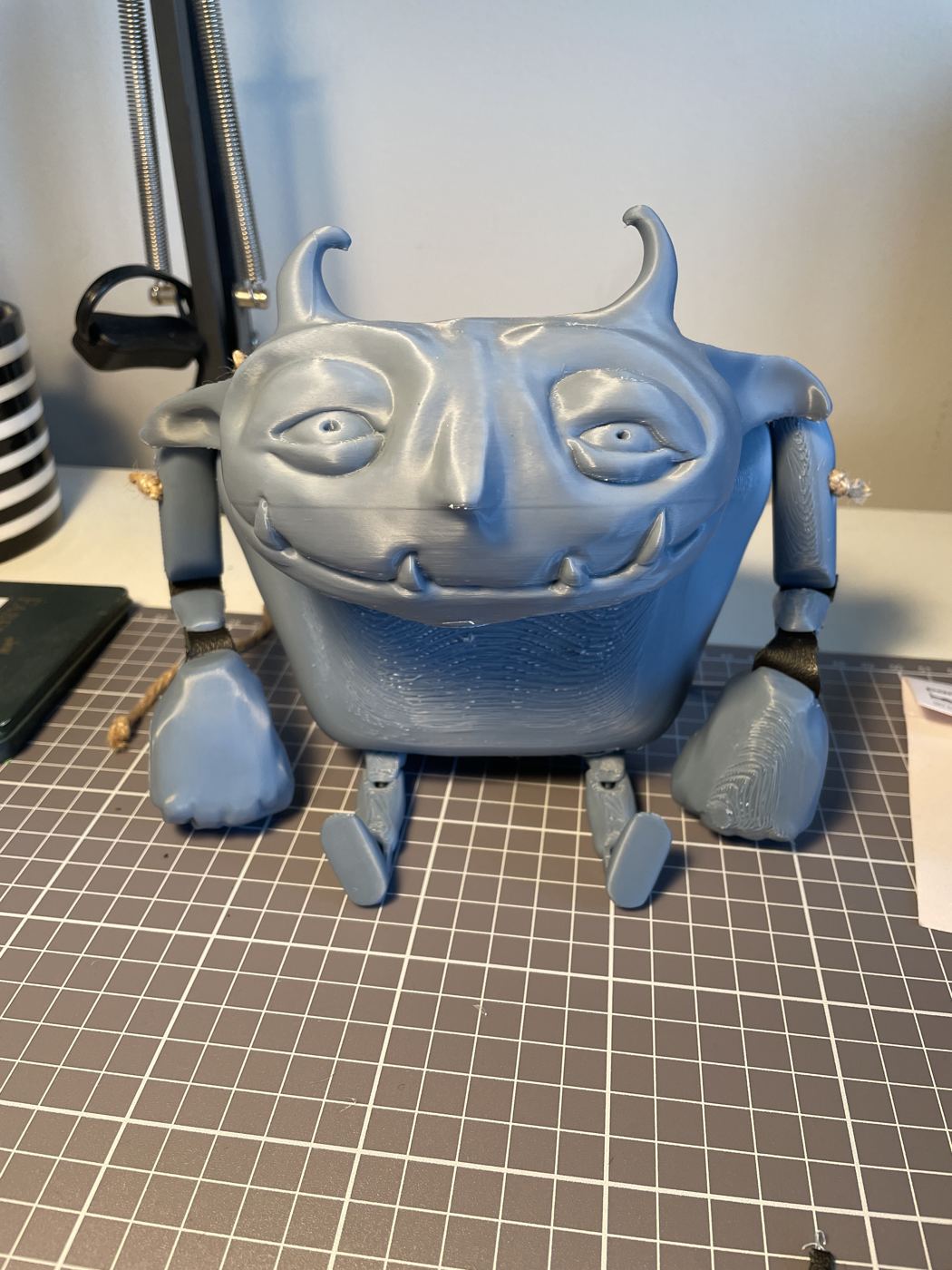
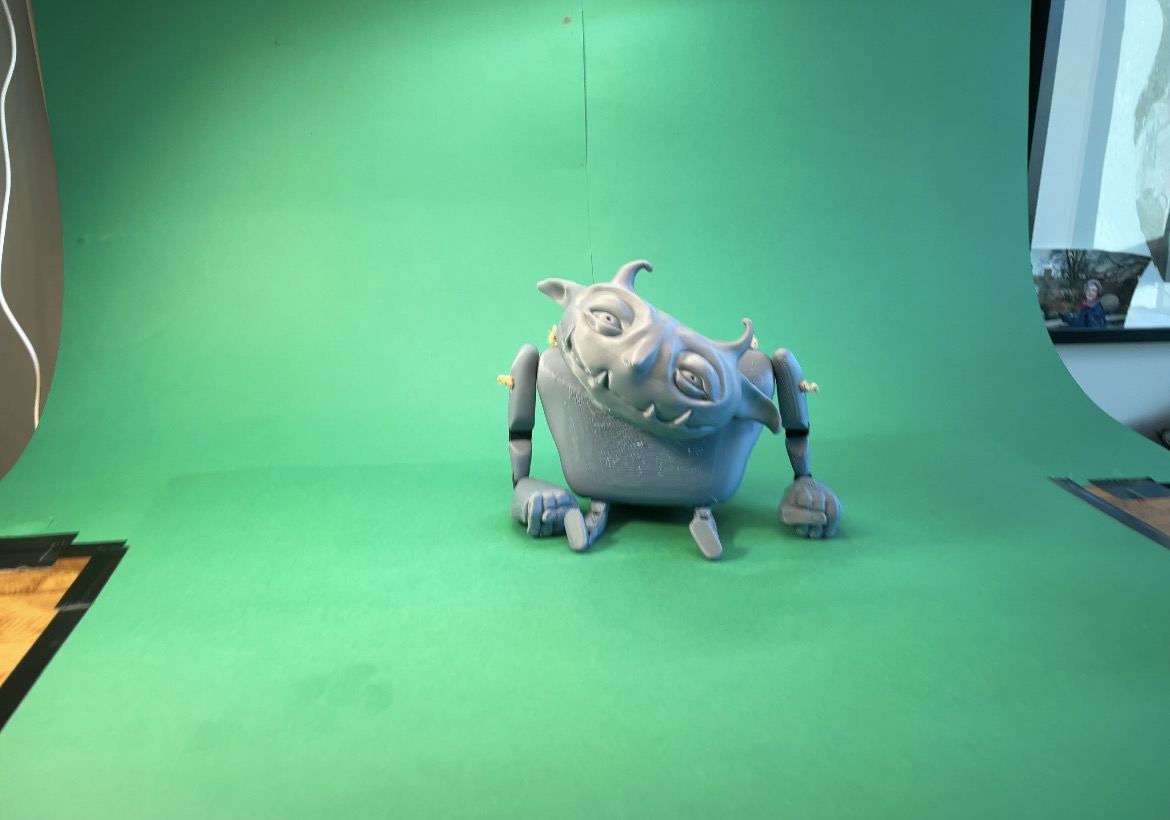
FOE in front of a greenscreen for the first time. Not a performance yet, just a first look at how he reads on camera.
The plan now is to test, in this very homemade greenscreen studio, how I can film on an iPhone, 3D track the footage into Unreal Engine and merge it with the virtual world.
The last chapter
is still further down the path.
© 2026 Mikael Jæger Jensen. FAE & FOE (FE & FÆ), its characters, drawings, puppets and film are protected by copyright. All rights reserved.